

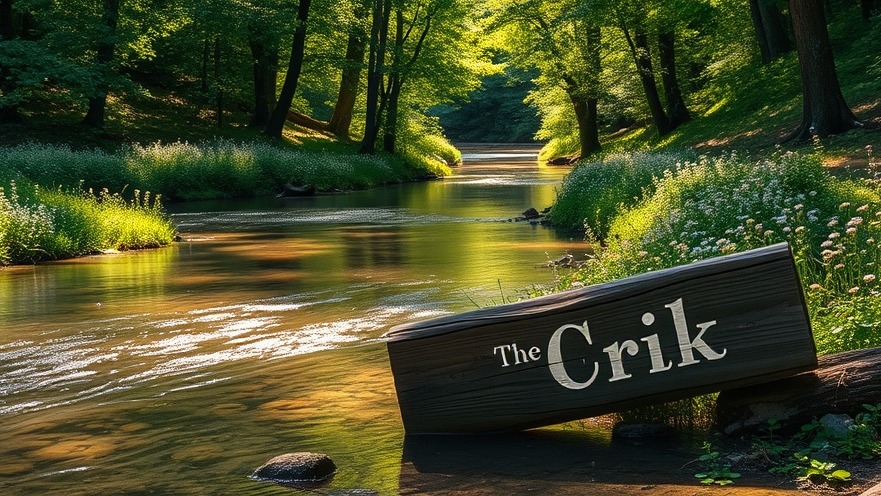
In the charming town of White Creek, New York, nestled in the foothills of the Taconic Mountains, a curious nickname has long intrigued residents and visitors alike: "The 'Crik." While the town’s official name is White Creek, locals often refer to it with this affectionate, colloquial term. But what is the origin of this nickname? Is it a historical reference, a linguistic quirk, or something else entirely? This article explores the history of White Creek, the possible roots of its nickname, and the cultural context that keeps "The 'Crik" alive in the community’s identity.
A Brief History of White Creek
White Creek’s story begins in the 18th century with the granting of the Cambridge Patent in 1761, which opened the area to settlement. The first settlers in the present-day hamlet of White Creek were Quakers, drawn to the region’s fertile lands and serene landscapes. John Allen constructed the first permanent residence in 1757, with an addition in 1770, a house that remains one of the best-preserved structures from that era in White Creek. White Creek settlers began arriving in force in 1765.The town was officially formed in 1815, carved out from the larger town of Cambridge, and named after the White Creek stream that flows through it.
By the late 18th century, White Creek had become a hub of regional commerce, boasting industries such as grist mills, a cotton factory, a flax mill, woolen mills, tanneries, and manufacturers of scythes, hoes, and axes. The White Creek Historic District, listed on the National Register of Historic Places in 1979, preserves 20 buildings from this period, showcasing architectural styles like Greek Revival, Federal, and Queen Anne. This rich history provides the backdrop for understanding the town’s cultural and linguistic evolution, including its distinctive nickname.
The Name "White Creek"
The town derives its name from the White Creek, a stream that meanders through its southeastern region, with tributaries like Center White Creek and Little White Creek also flowing through the area. White Creek is a common name. There is the one in White Creek running into the Walloomsac, which is actually the "Little" White Creek. There is another running out of Pumpkin Hook into the Owlkill in Cambridge, and yet another in Salem that runs out of Vermont. Also one out near Poland, NY. But why was the creek named "White"? Historical records offer no definitive answer. It could reflect the creek’s appearance; perhaps its clear waters, white rocks, or sandy banks. Or it might honor an early settler or landowner with the surname White. Another possibility is that the name has Native American origins, though no specific evidence supports this. For instance, the nearby Hoosic River, which forms part of White Creek’s southern boundary, derives its name from an Algonquian term, suggesting that local waterways often carried names rooted in indigenous languages or early settler observations.
Originally Salem was known both as White Creek (or Crick) to the English and New Perth to the Scots/Irish, and present day White Creek was "Little White Creek". The inhabitants of Salem asked the State to decide which name to use, and the politicians being wiser than today's threw out both and named it Salem (peace). When it became Salem the "Little" was dropped off White Creek's name.
Without primary sources like deeds, maps, or diaries to clarify the creek’s naming, the origin remains speculative. However, the creek’s prominence in the town’s geography and identity makes it a central piece of the puzzle in understanding the nickname "The 'Crik."
The Pronunciation: Creek vs. Crick
The most plausible explanation for the nickname "The 'Crik" lies in the local pronunciation of the word "creek." It is actually written as White Crik in Vermont records from the 1777 period, so the accent has been around from the beginning. Across the United States, the pronunciation of "creek" varies, with two primary forms: "creek" (rhyming with "meek") and "crick" (rhyming with "pick"). According to the Harvard Dialect Survey, conducted by linguists Bert Vaux and Scott Golder, the "crick" pronunciation is more common in the Midwest, parts of Pennsylvania, and some rural areas, while "creek" dominates in most of New York State, including upstate regions like Washington County.
However, small, isolated communities like White Creek can develop unique speech patterns that deviate from regional norms. It’s likely that in White Creek, some residents pronounce "creek" as "crick," a variation that could have been passed down through generations. This pronunciation would naturally transform "White Creek" into "White Crick," which may have been shortened to "The 'Crik" as a casual, affectionate nickname for the town. The use of "The" in the nickname, as noted in local references, adds a folksy charm, emphasizing the community’s connection to the creek and its distinctive way of speaking.
Evidence from Local Businesses
A modern clue to the nickname’s origin comes from a local business, Crik Gravel & Land Development. The company’s name, spelled "Crik," strongly suggests that the "crick" pronunciation is not only recognized but embraced within the community. Founded in 2018, the business likely chose this spelling to reflect local dialect, paying homage to the town’s linguistic heritage. Similarly, a rental property in nearby Eagle Bridge is named "The Crik House," further indicating that the term is part of the area’s cultural fabric. These examples provide tangible evidence that "crick" is a locally accepted pronunciation, supporting the theory that "The 'Crik" derives from how residents say "White Creek."
Regional Dialects and Their Origins
To understand why pronunciation variations like "crick" exist, it’s helpful to explore the broader context of American English dialects. The United States is a linguistic mosaic, shaped by centuries of immigration, settlement patterns, and geographic isolation. In upstate New York, dialects are influenced by the Inland North region, which includes parts of Western New York and extends to Midwestern cities like Chicago and Milwaukee. However, White Creek’s proximity to Vermont and its rural setting may have fostered a unique blend of speech patterns.
The early Quaker settlers of White Creek, who arrived from various parts of the Northeast, likely brought their own linguistic traditions. Quakers, originally from England, spoke a form of English that aligned with standard British pronunciations, where "creek" is typically pronounced as "creek." Over time, however, interactions with other settlers—possibly from regions where "crick" was more common, such as Pennsylvania or the Midwest—could have introduced this pronunciation. Rural communities often preserve older or idiosyncratic speech patterns due to their relative isolation, which may explain why "crick" persists in White Creek despite the broader regional preference for "creek."
Linguistic studies, such as the Harvard Dialect Survey, highlight that pronunciation variations like "creek" versus "crick" are not uncommon in the U.S. For example, in parts of the Midwest, "crick" is associated with smaller streams, while "creek" denotes larger ones. While this distinction is not explicitly documented in White Creek, the town’s small streams, like Little White Creek, might align with the "crick" connotation, further embedding the term in local usage.
Local Impact
The nickname "The 'Crik" has more than linguistic significance; it reflects White Creek’s identity as a close-knit, rural community with a strong sense of heritage. Nicknames often serve as cultural markers, distinguishing a place and its people from outsiders. In White Creek, "The 'Crik" evokes a sense of pride in the town’s history, from its Quaker roots to its agricultural traditions. The term appears in local businesses and properties, suggesting that residents embrace it as a symbol of their unique character.
The nickname also underscores the importance of the White Creek stream itself, which has shaped the town’s geography and economy. Early industries, such as mills and factories, relied on the creek’s waterpower, and today, the surrounding creeks and trails attract outdoor enthusiasts for hiking, biking, and snowmobiling. By calling their town "The 'Crik," residents celebrate this natural feature and the community it has fostered.
Conclusion
While the precise origin of "The 'Crik" remains undocumented, the most likely explanation is that it stems from the local pronunciation of "creek" as "crick," a variation common in some U.S. regions. This linguistic quirk, reflected in local business names like Crik Gravel & Land Development and The Crik House, adds a layer of charm to White Creek’s identity. The nickname encapsulates the town’s rural heritage, its Quaker roots, and its connection to the White Creek stream that defines its landscape. Residents and visitors are invited to share any family stories or records that might shed further light on this endearing moniker, helping to preserve White Creek’s rich history.


Write A Comment